
COMPLETE EPS LINE CONFIGURATIONS
Flexible EPS Production Lines
The Bottom Line: EPS flexibility lets you compete in the market for pickling services with an economical, environmentally-friendly and differentiated product. Explore the different EPS Production Systems below:
EPS Coil Lines

The EPS Coil Line is how many steel processors and picklers deploy EPS technology in their own facilities. EPS Coil Lines can be flexibly configured to accommodate a variety of production capacities. Placing multiple EPS Cells in series increases production with only minor increases in line length. Below are representative capacity values for increasing numbers of cells, based on 24/6 operation (actual values will vary according to product mix).
- One Cell – 19,000 tons/month / Line length: 35m
- Two Cells – 33,000 tons/month / Line Length: 43m
- Three Cells – 43,000 tons/month / Line Length: 51m
- Four Cells – 51,000 tons/month / Line Length: 59m

EPS CTL Plate Line
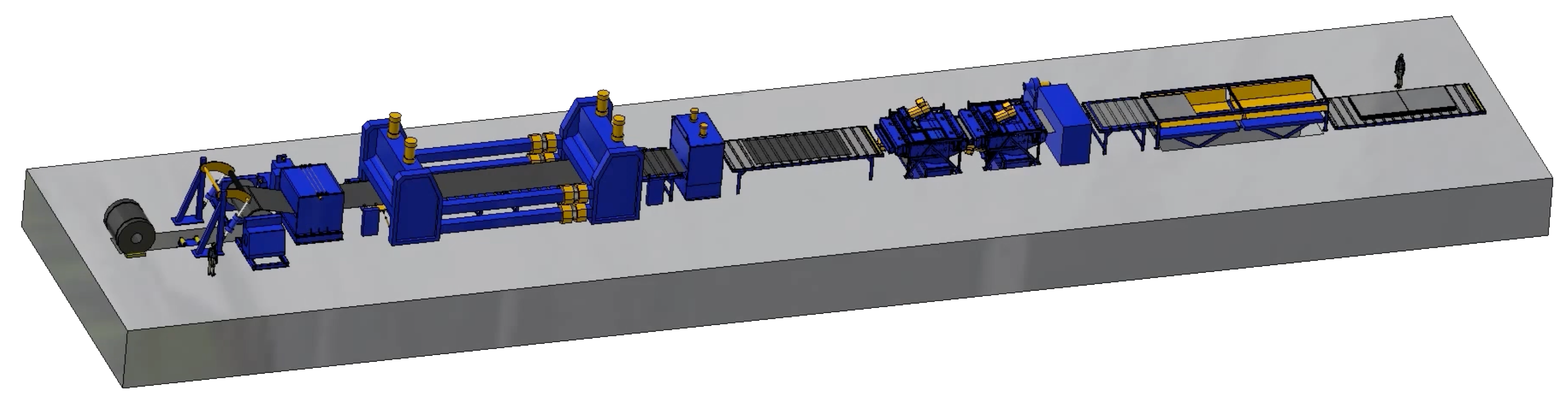
Solution: Integrate an EPS Sheet/Plate Cell into your EXISTING CTL line. This creates an efficient, compact line that produces fully pickled, clean, dry, rust-resistant plate from 3 – 25mm (0.118 – 1″) thick.
Adding the EPS Cell presents only a modest increase in a CTL line’s length and capital cost because the smaller Cell (only 4 Slurry Turbines) achieves the needed scale removal at attractive line speeds for heavy material. If the plate only needs to be ‘cleaned up’, rather than thoroughly pickled, the speed can be increased by up to 3X for less than half the cost.
EPS Sheet-to-Sheet Lines
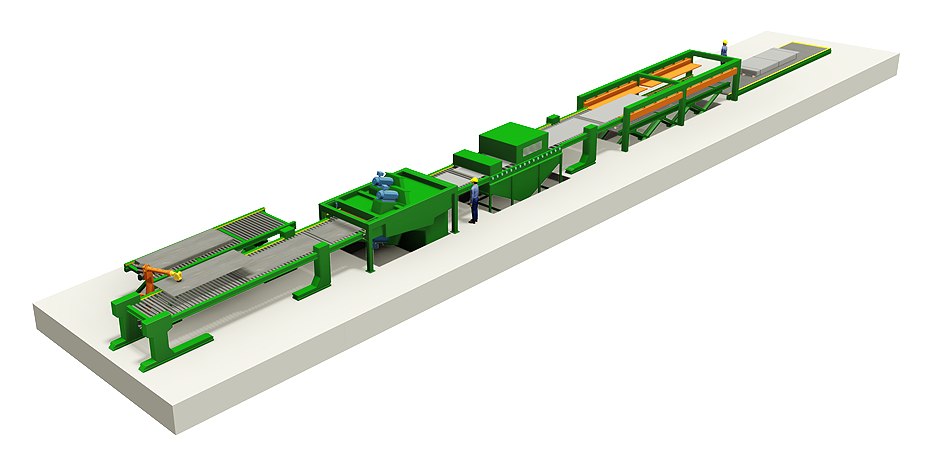
For steel processors who primarily supply sheets to their customers, an EPS Sheet-to-Sheet Line can be an ideal addition. It helps them “get in the game” faster and at a much lower capital cost. EPS pickling steel in sheet form offers these additional advantages:
- EPS processing “off-line” can increase CTL capacity. Stacks from your CTL line are bundled to the customer’s typically low max lift size, so the CTL stops frequently to offload stacks. CTL stacks going to the EPS Sheet Line can be much larger, so CTL line interruptions are reduced.
- EPS’ing in sheet/plate format means you can support multiple CTL lines, including sheet/plate produced by others.
- Sheet-to-Sheet allows you to clean up surface rust and defects to improve or reclaim material already in sheet form.
- Reduce inventory by stocking only black coils and black sheets, and then convert sheets to dry EPS or oiled EPS according to demand.
- If clean, dry EPS’d coils are run on a CTL line, the blanks may pick up oil and other residue. The EPS Sheet line always yields perfectly clean blanks.


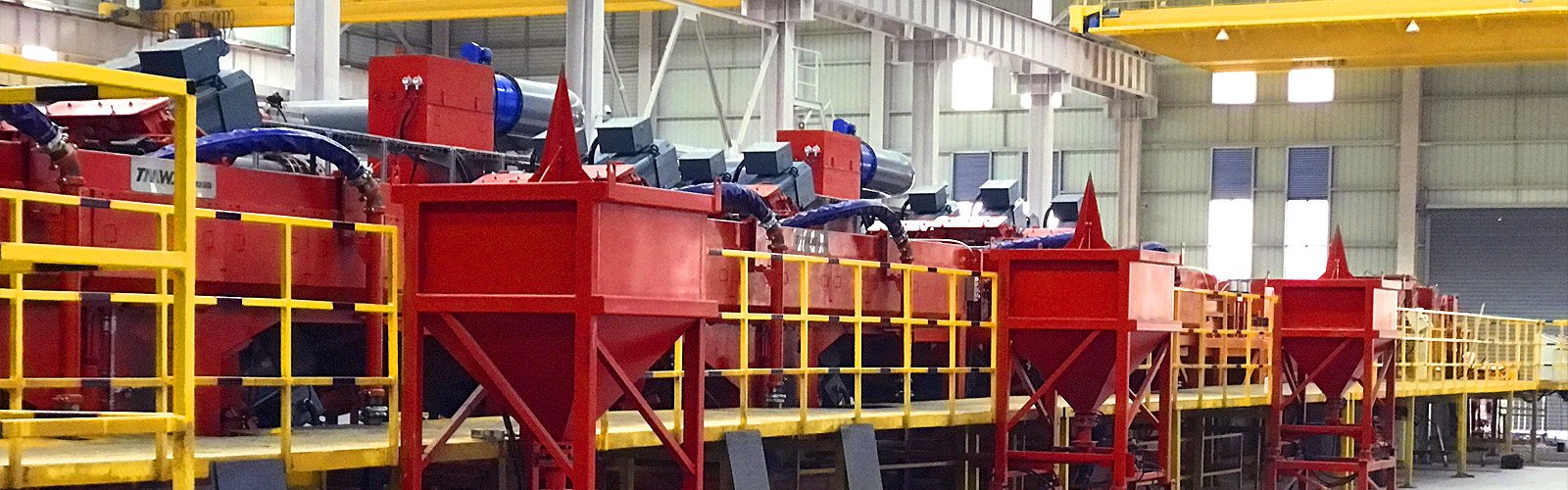


The new Advanced High Strength Steel (AHSS) grades are very difficult and costly to descale by traditional acid pickling. The pickling line must be slowed considerably and sometimes the coil run through twice. By contrast, EPS pickles these grades thoroughly and economically, incurring only modest reductions in line speed compared to low carbon grades.
Using an EPS Cell to ‘pre-pickle’ AHSS coils ahead of the acid tanks can considerably speed up the acid line. The EPS Cell does not need to fully descale the strip – it can be run at 3X the speed needed for full descaling. But that can reduce the duty on the acid tanks enough to speed up the line overall and significantly improve economics.